
Rythm Health is trying to remove the most annoying part of routine blood work: scheduling a lab visit, driving there and waiting for a needle. Its at-home device attaches to the upper arm, collects a small sample and packages that sample for return to a laboratory.
The company says results are delivered through its app in less than seventy-two hours after processing and that its laboratory work is CLIA certified and CAP accredited. We have not separately validated the collection device or laboratory performance. This is a documented assessment of the service, its published process and the ownership questions that matter before paying for repeated testing.
The appeal is real. Health information becomes easier to gather when the collection step fits into an ordinary morning. But more data is not automatically more useful, and Rythm itself states that it does not provide medical advice, diagnosis or treatment.
The useful invention is less friction
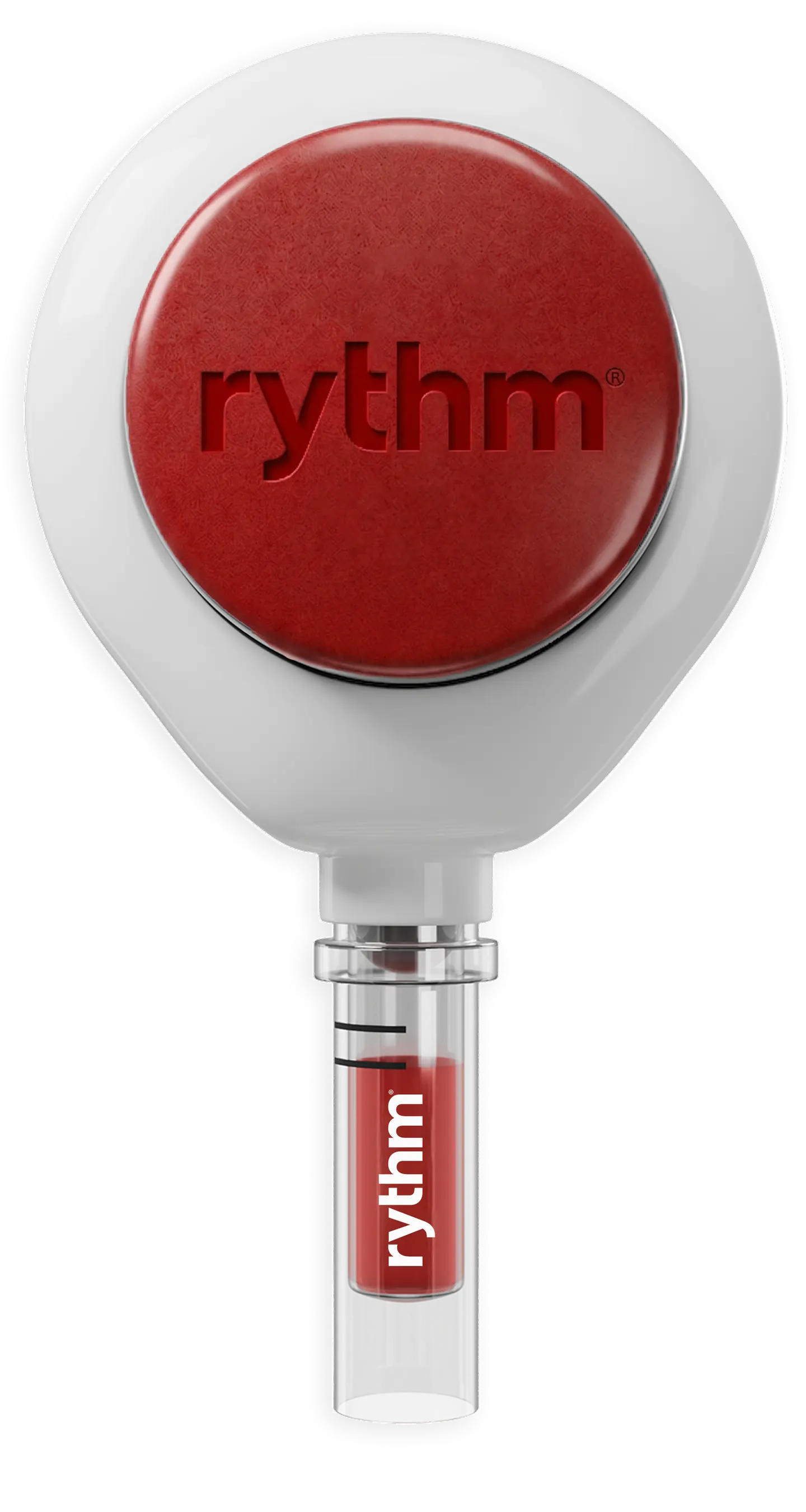
The collection device is visually simple: place it on the upper arm, collect the sample, then return the packaged sample by mail or available pickup. That is materially different from a finger-prick kit that asks the user to fill several spots or tubes one drop at a time.
Convenience matters most when testing is meant to repeat. A one-time health dashboard can be interesting. A process that is easy enough to complete on schedule has a better chance of showing change over time.
The test panel is not the interpretation
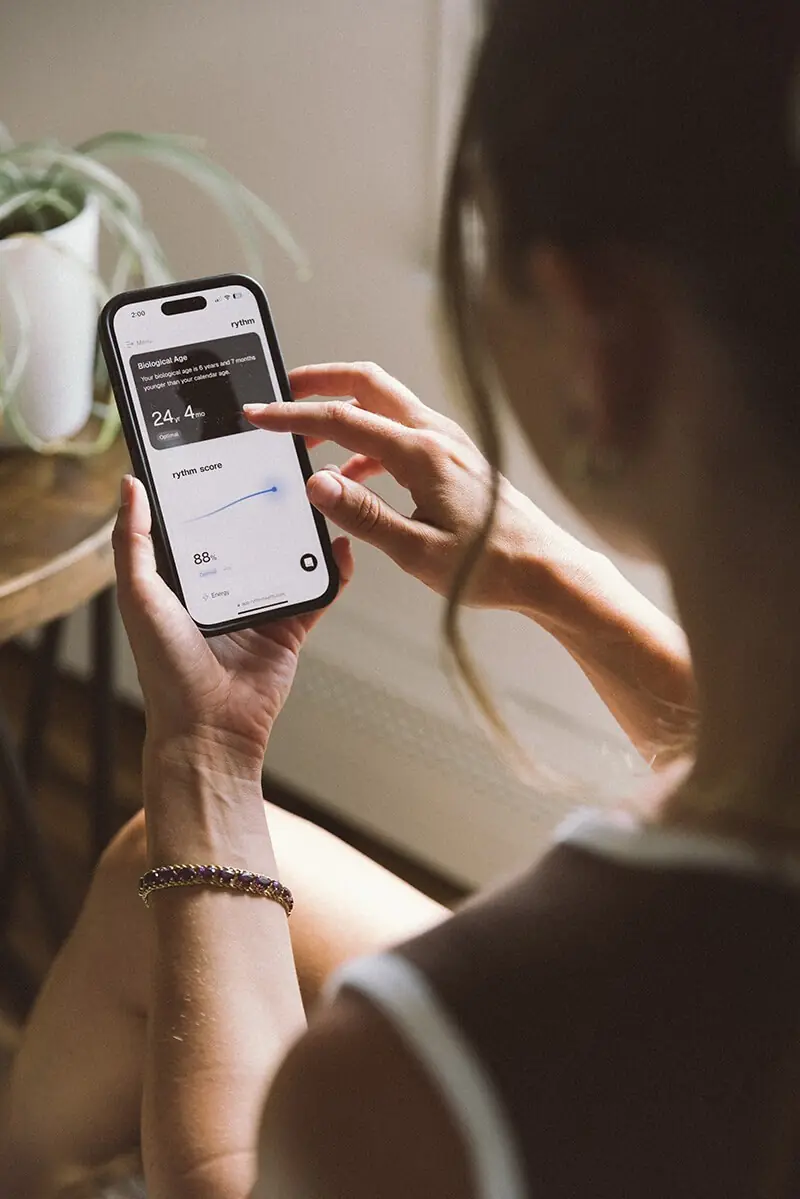
Rythm publishes a broad marker list that includes cardiovascular, metabolic, hormonal and nutritional measurements. The app presents results and trends, but a colored range is not a diagnosis and may not reflect the target range a clinician would choose for one particular person.
Before subscribing, ask a licensed provider which markers would change an actual decision. Testing everything can create more follow-up work without creating better care. The best panel is the one connected to a clear clinical question or a sensible monitoring plan.
Know what the membership includes
Rythm's published disclaimer says membership pricing combines technology and service fees with access to prepaid laboratory and other services. It also says certain items and services require additional payment.
That makes the pre-purchase call important. Ask how many collections are included, whether unused tests roll over, what shipping or pickup costs, how cancellation works and what happens when a sample cannot be processed. Get the answer in writing before treating the advertised monthly price as the full annual cost.
Treat health data like health data
The service operates through an account and app, so the privacy policy matters alongside the collection hardware. Review what information is stored, which laboratories or service providers receive it, how deletion requests work and whether data is used for product development or marketing.
Use a unique password and enable any available account security. A smoother collection process should not make the data-handling questions feel casual.
Who this makes sense for
Rythm is most interesting for someone who already has a reason to repeat certain laboratory measurements and finds the lab visit to be the obstacle. It may also appeal to people who want a simpler collection experience and are willing to pay for the surrounding software and logistics.
It is a poor substitute for urgent evaluation, a physical examination or a clinician-directed workup. Rythm says the service does not provide medical advice, diagnosis or treatment and recommends discussing questions about results with a licensed provider. That is the right boundary to keep in view.
Products in this story
The useful part, product by product
At-home laboratory collection
Rythm Health
An upper-arm blood collection device, return logistics and an app that presents biomarker results and trends.
- Available across all fifty states according to Rythm
- Company states its laboratory work is CLIA certified and CAP accredited
- Not a replacement for medical advice, diagnosis or treatment
Sources and product information
Product details were checked against the manufacturers’ published information at the time of writing.