Some of the most important technology in a household is not designed to attract daily attention. It exists so that a difficult task is easier to begin and the result is easier for someone else to understand.
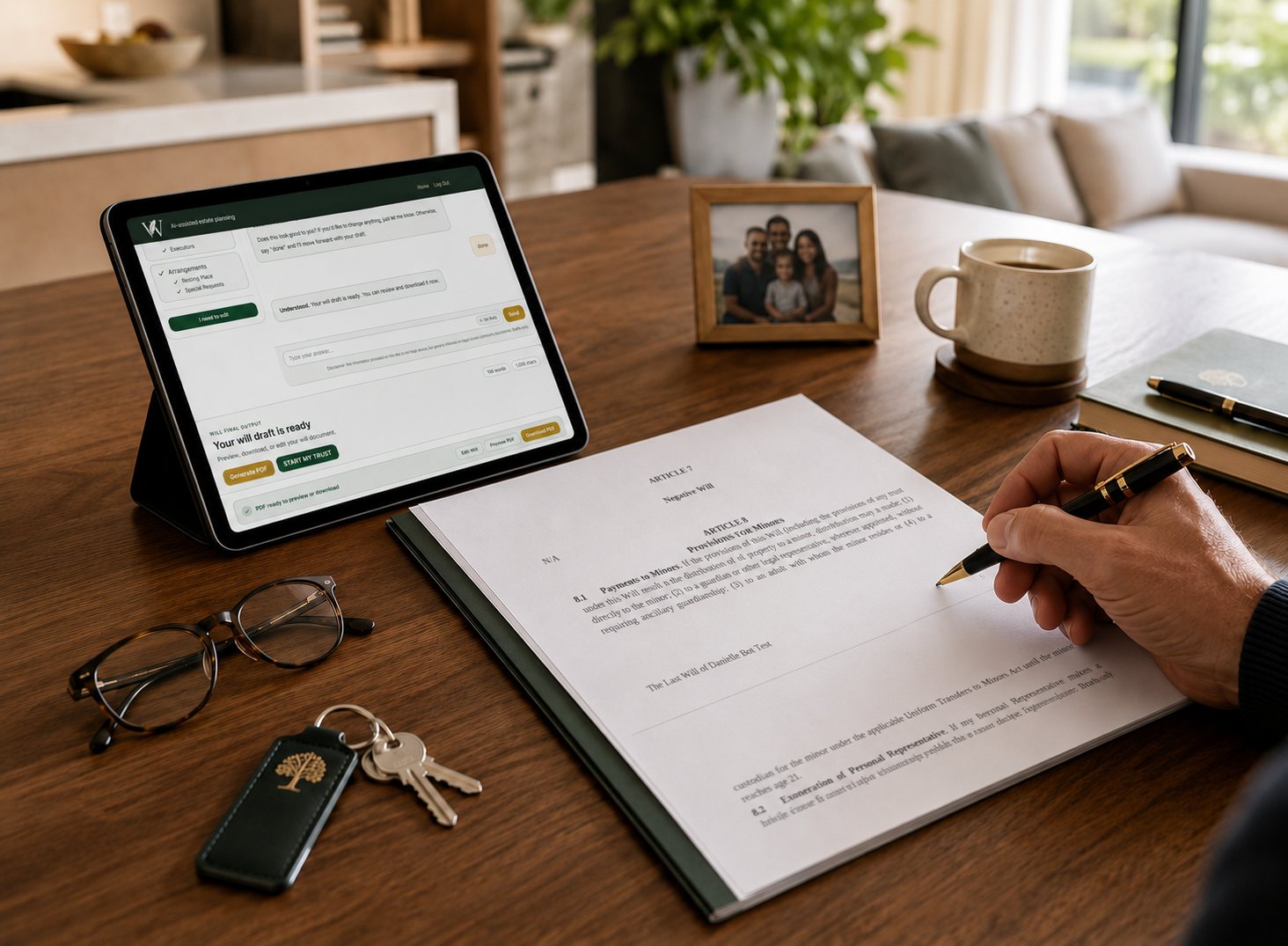
Legacy Will is built around that quieter goal. The system guides a person through wishes, contacts, assets, documents and family instructions, then gives the household a recognizable place to keep the resulting plan.
This is not a substitute for a lawyer, financial adviser or jurisdiction-specific estate documents. Its role is organization, preparation and handoff. That narrower promise is also what makes it useful.
Organization is a form of care
Families rarely struggle because nobody cared enough to leave instructions. They struggle because information lives across drawers, inboxes, accounts and conversations that were never written down. Legacy Will creates one sequence for gathering that context.
The workbook format matters because it slows the process down. A form on a screen can encourage speed. A physical guide creates space for discussion, notes and questions that need a follow-up rather than a checkbox.
The handoff is the real product
A planning system succeeds only when another person can use it. Names should be current, locations should be specific and trusted people should know that the plan exists. A beautifully completed workbook that nobody can find is still a failed handoff.
Legacy Will works best when the owner treats it as a household process. Complete the guide, place the relevant documents where they belong, tell the appropriate people how to access them and schedule a yearly review.
The goal is not to document every detail. It is to remove the avoidable uncertainty that arrives at the worst time.
What belongs in the plan
The strongest entries are practical: key contacts, document locations, account categories, care preferences and instructions that would otherwise exist only in memory. The guide can also prompt personal wishes and family context that formal records do not capture.
- List the people who should be contacted and how to reach them.
- Record where originals and account information are stored.
- Separate personal wishes from documents that carry legal authority.
- Avoid placing raw passwords in an unprotected workbook.
Where the product stops
Legacy Will can help a person organize questions and record preferences. It cannot determine whether a document is legally sufficient, choose the right tax strategy or replace advice tailored to a family and its jurisdiction.
That boundary should be treated as a feature, not fine print. Use the system to arrive at professional conversations better prepared and to leave the household with clearer instructions after those conversations are complete.
Products in this story
The useful part, product by product

Publisher product · 9.3 editorial score
Legacy Will
A guided planning system for organizing wishes, contacts, records and the practical context a family may need later.
- Structured prompts
- Physical planning materials
- Designed for a clear family handoff
Sources and product information
Product details were checked against the manufacturers’ published information at the time of writing.