Families say they want to preserve stories, then discover that the first question is too large. Tell me about your life can sound meaningful, but it asks the speaker to find a beginning, a theme and a stopping point all at once.
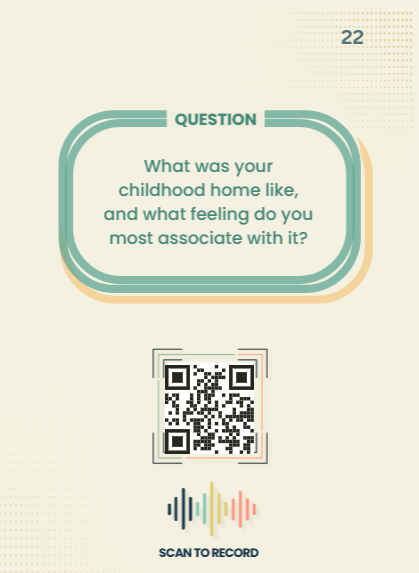
Story Capsule uses a smaller unit. Each card asks one specific question. The person scans the code and records an answer, allowing a family archive to grow one comfortable conversation at a time.
The technology is deliberately secondary. The card starts the moment. The recording preserves the voice, expression and details that a written family tree cannot hold.
The prompt does the hardest work
A useful prompt provides a doorway into a memory. Questions about a childhood home, a family tradition or an early job create a scene the speaker can enter without preparing a speech.
That structure also helps the listener. Instead of silently collecting a recording, a family can use the card as the start of a real conversation, then save the answer before the details disappear back into everyday life.
Voice carries what text drops
A transcript can preserve facts, but a voice carries timing, humor, hesitation and the way a person says a familiar name. Video adds expression and surroundings. Those details are often the reason a recording matters years later.
Story Capsule is most compelling when it stays casual. A kitchen table, a comfortable question and a few honest minutes can produce a more recognizable family record than a formal interview nobody wants to schedule.
The best family archive may begin with one answer that sounds exactly like the person you love.
Build a habit, not a production
Choose a pace that feels natural. One card during a visit or a few questions around a holiday can create momentum without turning time together into a recording session.
Do not chase perfect lighting or polished performances. Confirm the audio is clear, keep the phone steady and leave room for the answer to wander. The unexpected detail is often the part worth keeping.
- Start with a question the person will enjoy answering.
- Record in a quiet, familiar place.
- Name or organize recordings while the context is fresh.
- Make a separate copy of anything the family considers irreplaceable.
Plan for access over time
Any digital archive is also an access plan. Families should understand who can see a recording, how invitations work and what happens when phones, email addresses or family responsibilities change.
Review access periodically and keep a note with the family records that explains where the archive lives. The recording is the emotional asset. Clear ownership and backup habits are what help it remain available.
Products in this story
The useful part, product by product
Publisher product · 9.2 editorial score
Story Capsule
A question-card system that uses scannable codes to help families record, organize and share personal stories.
- Specific conversation prompts
- Voice or video recording
- Designed for gradual family participation
Sources and product information
Product details were checked against the manufacturers’ published information at the time of writing.